

Mt. Kailash Pilgrimage
– 20 days


Summary
Embark on a once-in-a-lifetime spiritual adventure to Tibet’s most sacred mountain during the holiest time of year. The Saga Dawa Festival honors the birth, enlightenment, and parinirvana of Lord Buddha, drawing thousands of pilgrims to Mount Kailash for a deeply moving kora (circumambulation). This 53 km trek begins at Tarboche with the dramatic flagpole-raising ceremony and continues over three days through high-altitude terrain, crossing the revered Dolma La Pass and visiting sacred sites like Gauri Kund and Zutulpuk Monastery.
This journey is more than a trek—it’s a profound immersion into Tibetan culture, devotion, and compassion. From the ancient monasteries of Lhasa to the mystical ruins of the Guge Kingdom, every step is infused with spiritual resonance and awe-inspiring Himalayan beauty.
- All necessary travel permits for Tibet (delivery to any address within mainland China). Experienced Tibetan guide in Tibet (English-speaking).
- Transportation within Tibet (Airport / train station pick up & drop off at any time – no extra fees).
- All entrance fees to temples, monasteries, and palaces.
- All environmental protection fees for lakes, glaciers, and national parks.
- Accommodation in shared twin rooms with breakfast, as described in the itinerary (hotels only).
- At Mt. Everest: private room with toilet, heating, and hot water, including breakfast (no shower).
- At Mt. Kailash Kora: dormitory-style guesthouse accommodation (no breakfast, no bathroom).
- Driver and guide’s meals and accommodation.
- Vehicle fuel, tools, and repairs if needed.
- Porters or yaks to carry baggage during the Mt. Kailash Kora (horse riding available at additional cost).
- Oxygen tank for emergencies and bottled mineral water in the group vehicle (fair use).
- Welcome dinner.
- China visa.
- Hand delivery of Tibet Entry Permits at a mainland China airport. Plane or train tickets to/from Tibet.
- No breakfast provided at Samye hotel or any guesthouse stays. Meals, drinks, and other personal expenses.
- Horse for personal use during the Kailash Kora (must be used by one person only). Personal porters. Extra expenses due to unexpected natural events (delays, road closures, snowfall, etc.).
- Tips for the guide and driver (optional, but expected if the service has been satisfactory). Anything not specified under the “Included” section.
Itinerary
Day 01: Lhasa arrival [3650m]
Welcome to Lhasa! Your English-speaking Tibetan guide and driver will warmly welcome you and accompany you to your hotel. Lhasa is one of the highest cities in the world. We understand that the high altitude of Tibet can be challenging for some, so we recommend taking your time to acclimate. Rest assured, we will provide all the necessary support to ensure your well-being. Remember to drink plenty of water and take a good rest to minimise any altitude sickness symptoms. Prepare to begin your journey of a lifetime!
Overnight in Lhasa.
Day 02: Lhasa sightseeing: Potala Palace & Jokhang Temple
At the assigned time, we’ll begin our tour by visiting the iconic Potala Palace. Built in the 17th century by the fifth Dalai Lama, this magnificent palace offers breathtaking views of the entire city and is home to the private quarters of the Dalai Lama, numerous grand state rooms, and chapels. Afterwards, we’ll visit the revered Jokhang Temple, founded in the 7th century by Songtsen Gampo, which is considered the most sacred monastery in Tibet. Immerse yourself in the rich cultural heritage of this magical land: take a stroll through the vibrant Barkhor old quarter and follow pilgrims from all over the Tibetan plateau on a kora around the Jokhang Temple. Kora is a term used in Tibetan Buddhism that refers to the practice of circumambulating around a sacred site, such as a temple, stupa or mountain, as a way of showing devotion and accumulating merit. The practice involves walking clockwise around the site, often while reciting mantras, prayers or other sacred texts. It is also believed to bring good fortune and blessings to those who undertake it.
Overnight in Lhasa.
Day 03: Lhasa sightseeing: Drepung & Sera Monasteries
Today we’ll visit Drepung and Sera monasteries. After breakfast, we’ll venture to the outskirts of Lhasa to witness the grandeur of the Drepung Monastery, the largest in Tibet, which once housed 7000 monks. Along with the monasteries of Ganden and Sera, Drepung is one of the three great centers of Tibetan Buddhist education in the Gelugpa school, also known as the Yellow Hat Sect. Founded in the 15th century, it was the former residence of the Dalai Lama before the construction of the majestic Potala Palace. In the afternoon, you’ll be mesmerised by the famous debates of the Sera Monastery, where the monks engage with vibrant energy in intellectual discourse and challenge each other’s understanding of Buddhist philosophy. It’s a truly awe-inspiring experience not to be missed!
Overnight in Lhasa.
Day 04: Ganden Monastery and Drak Yerpa Hermitage day trip [140Km]
We will begin the day with a visit to Ganden Monastery, located atop a hill in the Kyichu valley, 50 km from Lhasa. It is the main seat of the Gelug Sect and was founded by Tsongkhapa in 1409. You can also do a kora around the monastery, which offers peaceful views of the typical Tibetan landscape. After lunch, we’ll head to the off-the-beaten-path complex of Drak Yerpa meditation caves and temples, one of the most holy pilgrimage sites since the 7th century. The visit takes about 2-3 hours of walking on a hillside. We’ll then return to Lhasa for some free time. Today’s activities will improve our acclimatisation to high altitude.
Overnight in Lhasa.
Day 05: Lhasa – Tsedang – Samye [180km, 3575m]
Let the adventure begin! We will head South-East towards the Yarlung Valley, the cradle of Tibetan civilization. Today’s plan includes exploring the region where the ancient Tibetan kings unified Tibet in the 7th century. Our first stop will be at Tsedang, the fourth most important city in Tibet, where we will visit the Yumbulagang Palace which dominates the valley from the top of a hill. Considered the first construction in Tibet, resembles a medieval fortress. Next, we will visit the Samye Monastery (8th century), the first Buddhist monastery in Tibet. The monastery’s unique architecture forms a gigantic mandala, following the structure of the universe according to Buddhist cosmology. If time permits, we will also visit the Temple of Traduk today.
Overnight in Samye.
Day 06: Samye – Gyantse [280Km, 3980m]
Early breakfast to get ready for an exciting day: we’ll start driving West towards Tsang region to ascend the Kampa-la Pass [4797m], where you’ll witness the stunning Mt. Noijin Kangsang [7206m] and the breathtaking turquoise waters of sacred lake Yamdrok-Tso. An unreal sight that will leave you spellbound all along the way to the Karo-la Pass [5050m], where you’ll marvel at the glacier that majestically hugs the roadside. The final stop will be the charming Gyantse town, home to the Kumbum Stupa inside Pelkor Chode Monastery, renowned for its exquisite Tibetan art paintings. From the top of the Kumbum, you’ll also be treated to a magnificent view of the majestic Gyantse Dzong fortress overlooking the valley.
Overnight in Gyantse.
Day 07: Gyantse – Sakya [250Km, 4320m]
Our first destination today is the historic Shalu Monastery. Built in the 11th century, the monastery was partially destroyed by an earthquake in the 14th century and then rebuilt, resulting in a blend of architectural styles. Shalu Monastery boasts an impressive collection of Buddhist art and sculptures that are well-preserved. It was a renowned center of learning for various tantric practices and techniques, and some of these skills were described in Alexandra David-Néel’s book, “Magic and Mystery in Tibet,” which gained worldwide attention. Back to the Friendship Highway, we’ll take you to the stunning Sakya Monastery, the principal seat of the Sakyapa Sect founded in 1073 and one of the four major Schools of Tibetan Buddhism. Its powerful abbots governed Tibet during the whole of the 13th century until they were eclipsed by the rise of the Gelugpa Sect. With its unique Mongolian architecture, this monastery stands out from any other you’ve seen before. The lucky ones may get to witness the sunset from atop the monastery walls, accompanied by the hypnotising sound of the monks playing their dungcheng, a traditional long Tibetan horn.
Overnight in Sakya.
Day 08: Sakya – Rongbuk (Mt. Everest) [230Km, 5000m]
Another thrilling day! We’ll reach one of the major highlights of our trip, near Mt. Everest North Base Camp [5200m]. The journey to Rongbuk involves crossing the high passes of Dong-la [4800m] and Gawu-la [5150m]. The Dong-la Pass gives the opportunity to see the little-known eastern face of Everest (Kangshung) and the Himalayas for the first time; and from the top of the Gawu-la you’ll enjoy amazing views of several peaks like Makalu, Lhotse, Cho Oyu, and Mount Everest. The Rongbuk Monastery is located at the foot of the Everest, and the highest monastery in the world. You’ll spend the night at the tourist camp site located a few kilometres from the actual Everest Base Camp used by mountaineering expeditions, where you’ll have direct views of Mt. Everest (Qomolangma). Since 2018 tourists are not allowed to visit the EBC due to environmental protection and now there is an eco-bus shuttle to access Rongbuk.
Overnight in Rongbuk.
Day 09: Rongbuk – Saga [300Km, 4490m]
Start your day early to enjoy the sunrise view of Mt. Everest summit [8848m] on the horizon. After breakfast, we will visit Rongbuk Monastery for a final view of Mt. Everest’s North Face. Our journey continues as we drive towards the Northwest, crossing high passes with enchanting views of the surrounding Himalayan peaks such as Cho Oyu and Shishapangma, and the wild and stunning Peikutso lake.
Overnight in Saga.
Day 10: Saga – Darchen [490Km, 4670m]
Early this morning, we’ll enter the semi-nomadic regions of Tibet’s far west. Keep your eyes peeled for authentic Tibetan landscapes as we traverse the vast and lofty Tibetan Plateau — the largest and highest in the world — on this long drive. Following the Yarlung Tsangpo River westwards, also known as the Brahmaputra in India, we’ll arrive in the small town of Darchen, nestled at the foot of Mount Kailash.
Overnight in Darchen.
Day 11: Trek to Dira-Puk Monastery [20Km, 5-6h, 5050m].
We begin the Pilgrimage Kora of Mount Kailash, the most sacred mountain in Asia. Tibetans and Hindus from across the world come here for religious reasons. We will begin the kora with a gentle ascent, enjoying views of the southwest face of Kailash as we enter the Valley of the Gods and follow the Lha Chu River to the Dira Puk Monastery. From here, we will have privileged views of its north face.
Overnight in Dira-Puk, at the foot of the majestic north face of Mt. Kailash, in a simple guesthouse (dormitory room without bathroom, with an outdoor latrine).
Day 12: Trek to Zutrül Puk Monastery [18Km, 6-10h, 4820m].
The day will start frosty and present itself as a great challenge. After a long 4-hour climb, we will reach the highest point of the journey: the Drolma-la pass at 5630 metres. The descent is initially steep but then becomes a comfortable walk until we arrive at the Zutrül Puk Monastery.
Overnight in Zutrül-Puk, in a simple guesthouse (dormitory room without bathroom, with an outdoor latrine).
Day 13: Trek to Darchen [14Km, 3-4h]
The final day is a mere formality compared to what was experienced the previous day. A gentle descent will allow us to complete the Kora around Mt. Kailash. But remember, it takes 107 more koras to achieve enlightenment. By midday, you should have arrived back in Darchen. Optionally, and after a brief rest in Darchen, you can take the mandatory “eco-bus” service to circle the Mapham Yum-tso (Manasarovar) lake kora.
Overnight in Darchen.
Day 14: Saga Dawa Festival – Tholing [250Km, 3740m]
Today we’ll go to an important pilgrimage area called Tarpoche where Saga Dawa Festival is held annually on the 15th day of the 4th month in the Tibetan calendar to celebrate the day Lord Buddha Sakyamuni was born, achieved enlightenment and passed away. Saga Dawa is the most significant festival in Tibet and for this reason we Tibetans strive to visit Mt. Kailash and complete its kora during this time. Once the festival ends, we’ll continue on a scenic and adventurous journey to the Tibetan Wild West with unique landscapes en route to the tranquil oasis town of Tholing (Zanda). As we stand over the first capital of Guge, the skyline comprises a vast sweep of the Ladakh Himalaya.
Overnight in Tholing.
Day 15: Guge Kingdom [139Km, 3740m]
You’ll become an explorer while visiting the Tsaparang citadelle, Guge’s latest capital, of greater significance in the history of Buddhist art. Its remarkable wall murals display close links with Ladakh and Kashmir. You’ll uncover hidden cave dwellings, twisting paths, and tunnels that connect the palaces, immersing yourself in a fascinating and ancient world. We will end the day among the arid and awe-inspiring landscapes of the Dungkar and Piyang caves, hidden treasures of the ancient Kingdom of Guge. Carved into sandstone cliffs between the 10th and 13th centuries, they house stunning mural paintings that showcase an exquisite fusion of Indian, Kashmiri, and Central Asian influences. Their mandalas and depictions of Buddhist deities offer a unique window into early Tibetan spiritual art. Thanks to their remote location, the site has preserved its authenticity, making it an unforgettable experience for those seeking a deep connection with Tibet’s history, art, and spirituality.
Overnight in Tholing.
Day 16: Tholing – Mapam Yumtso lake [275Km, 4600m]
Today begins the end of your Tibetan journey through the most sacred Buddhist monasteries and greatest mountains on earth. After breakfast, we’ll visit the Tholing Monastery, once the most significant monastic complex in western Tibet. Then we’ll drive back to Lake Manasarovar (also known as Mapam Yumtso in Tibetan), one of the three most sacred lakes in Tibet. Hindus believe that whoever bathes in it will clean all their sins and bring good karma. Before reaching the lake, we’ll take a short detour to Tirthapuri, a place where pilgrims traditionally bathe in the hot springs after completing the kora of Mt. Kailash.
Overnight at the near shores of the Manasarovar lake.
Day 17: Mapam Yumtso lake – Saga [485Km, ]
You’ll start your day by watching the sunrise over the holy waters of Lake Manasarovar. Afterwards, we’ll visit Chiu Monastery, then begin our return journey eastwards, stopping for a night in Saga. We’ll travel through arid landscapes of sand dunes and wonderful views of the Himalaya Range and the Tibetan Plateau.
Overnight in Saga.
Day 18: Saga – Phuntsokling – Shigatse [460Km, 3890m]
Today, we’ll leave the main routes behind and follow the Yarlung Tsangpo River to Phuntsokling Monastery [4010m], one of Tibet’s hidden treasures. Originally belonging to the Jonang school, it flourished in the 16th– 17th centuries under Jetsün Taranatha, who emphasized the Kalachakra Tantra. The monastery houses a monumental mural of the Buddha’s life, designed by Taranatha around 1615–1630. After his death, having founded monasteries and promoted Buddhism in Mongolia, Taranatha’s reincarnation was recognized by the Fifth Dalai Lama in the son of the Khalkha Mongol Khan. These incarnations became known as the Jetsün Dampa Hutuktu, spiritual leaders of the Gelug lineage in Mongolia. Although the Jonang tradition was later forcibly subsumed for political reasons, it persisted in secrecy in remote regions and endures to this day. The modern monastic complex is striking and photogenic and from here you can climb the hill to explore the ruins of the ancient dzong that once dominated the valley. In the afternoon, we’ll continue on to Shigatse [3840m], Tibet’s second largest city. If time allows, don’t miss doing the Kora around Tashilhunpo Monastery to enjoy sweeping views of the valley and the imposing Dzong.
Overnight in Shigatse.
Day 19: Shigatse – Lhasa [272Km, 3650m]
Our final day on this Tibetan traverse goes along the Yarlung Tsampo (Brahmaputra) River. This is the most direct route to Lhasa and part of the Friendship Highway. As early as possible, we’ll be visiting the Tashilhunpo Monastery, built in the 15th century by the first Dalai Lama and currently the seat of the Panchen Lama. Free time for the rest of the day in Lhasa.
Overnight in Lhasa.
Day 20: Tibet departure
Enjoy your last hours in Tibet exploring Lhasa on your own until your guide and driver meet you at the hotel to transfer you to the airport.
End of our services.
Other Trips
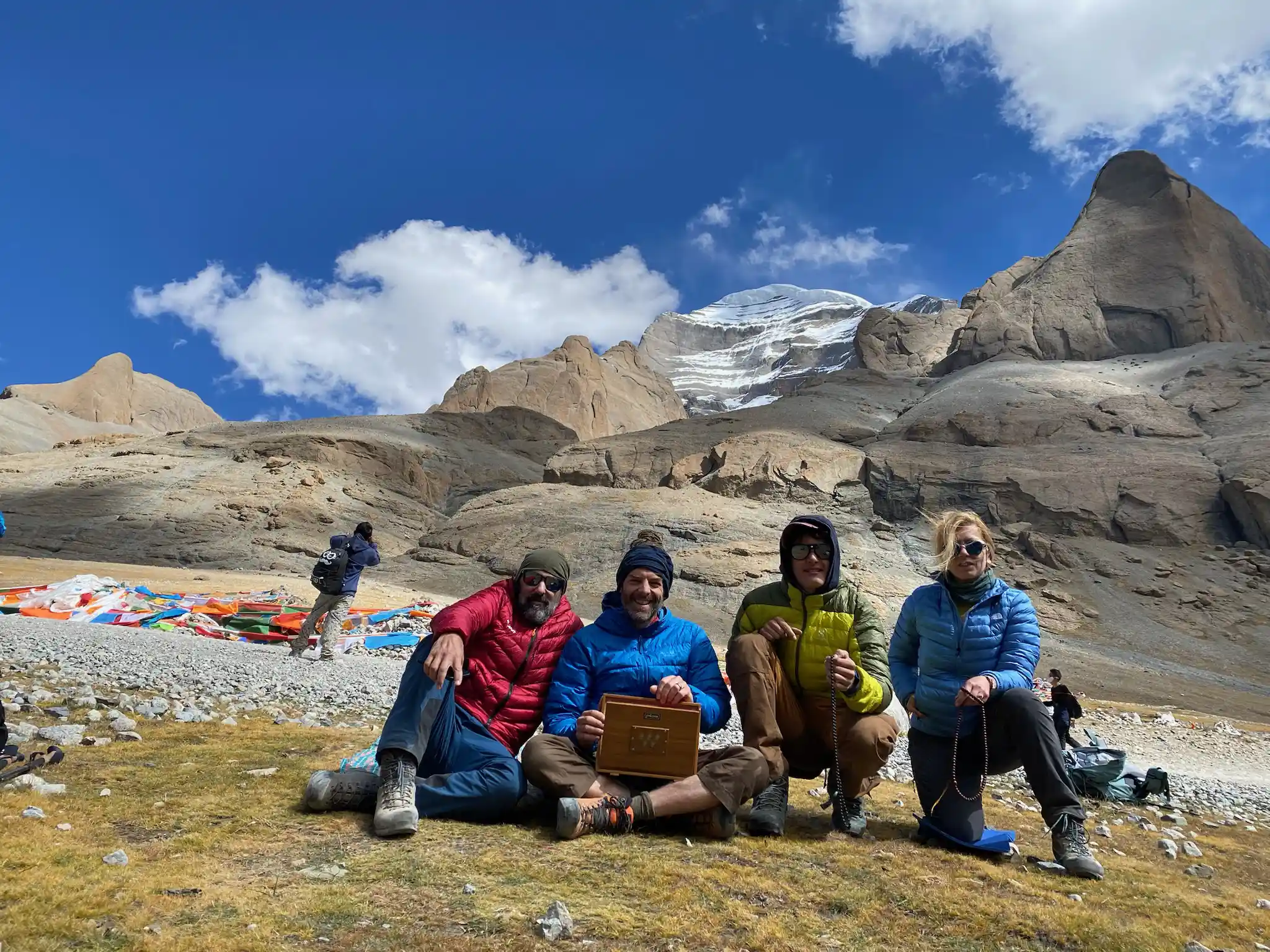
Tibet Tour with Mt. Kailash Trek – 14 days
The 14-day Kailash Kora pilgrimage is a spiritually rich journey through Tibet, beginning with acclimatization and cultural exploration in Lhasa before traveling westward via sacred lakes and ancient monasteries to Mount Kailash. The three-day...
14-Day Spiritual Tour: In the footsteps of the Buddha
A journey through Nepal and India retracing the life of Siddhartha Gautama—the Buddha—is more than travel; it is a spiritual and cultural pilgrimage. From his birthplace in Lumbini, to the site of his Enlightenment...
Jhomolhari Trek –
12 days
The Jhomolhari Trek is one of Bhutan’s classic high-altitude camping routes, leading from Paro deep into wild valleys beneath the sacred peak of Jhomolhari and back toward Thimphu. Over 12 days you combine iconic...